When visitors step from their tourist coaches onto the rolling hills of Hobbiton in Matamata, New Zealand, they enter a land that has lived in the collective imagination of millions since J.R.R. Tolkien first described The Shire.
Originally a temporary film set for The Lord of the Rings trilogy, this section of the Alexander sheep farm was rebuilt for The Hobbit trilogy before becoming a permanent tourist attraction in 2012. Thousands of visitors each day stroll along its winding paths, imagining what lies on the other side of the round doors of the 40-plus Hobbit holes tucked into the folds of the sloping landscape.
For years, there was nothing on the other side, the iconic doors mere movie-set façades. Then, in April 2023, Owner Russell Alexander, Hobbiton CEO Shayne Forrest, Project Lead Brian Massey, and Creative Director Ra Vincent set about to create two fully-habitable Hobbit holes on Bagshot Row.
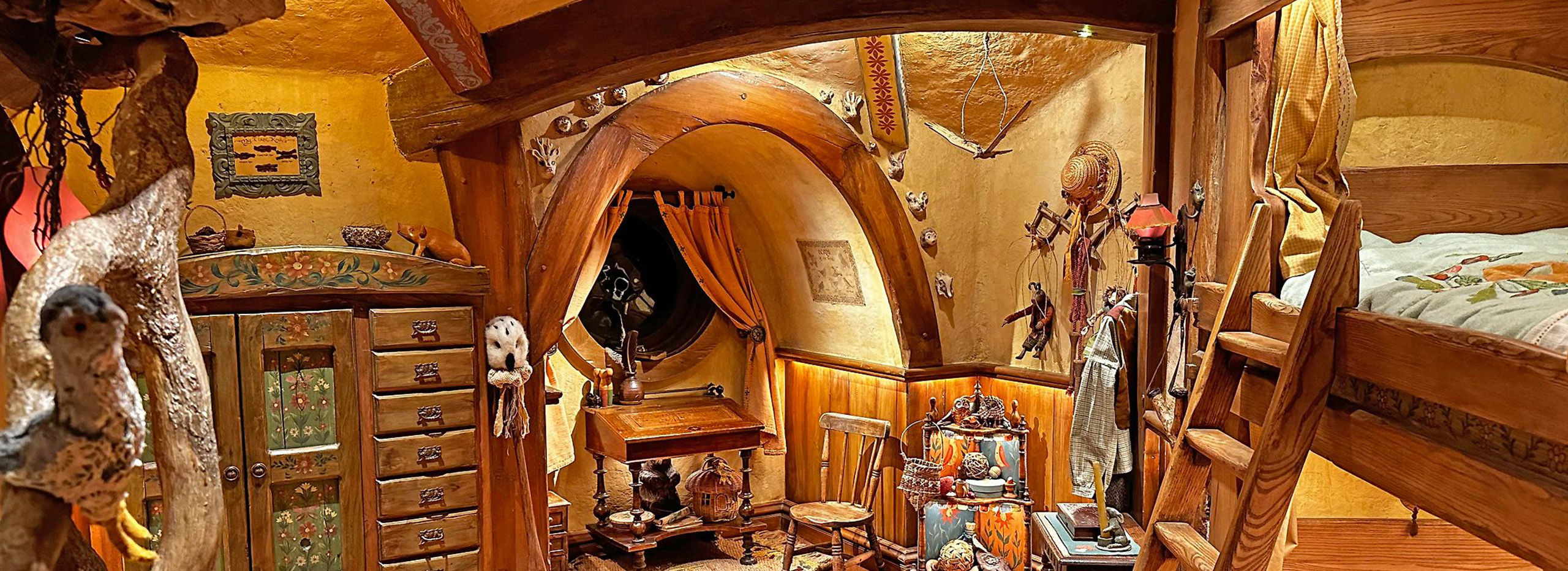
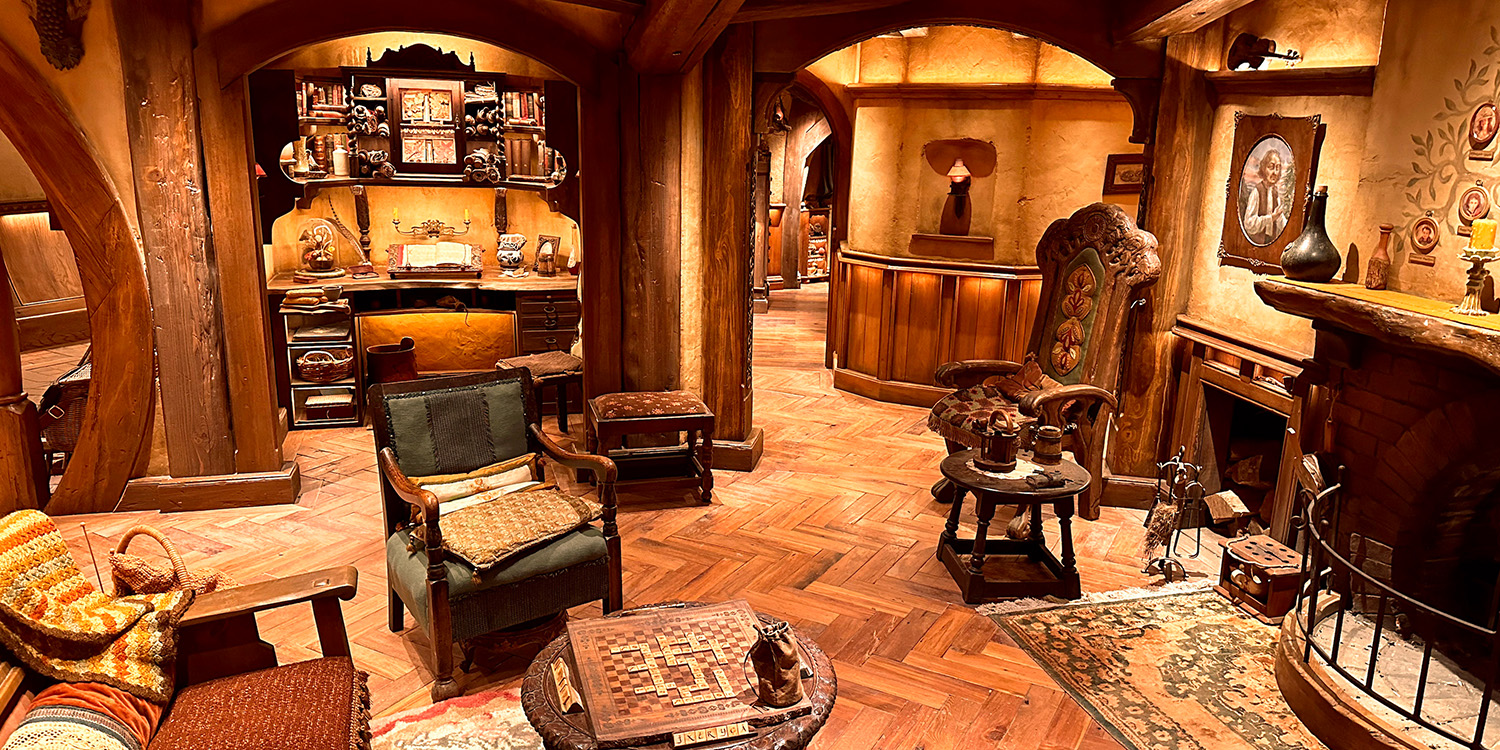
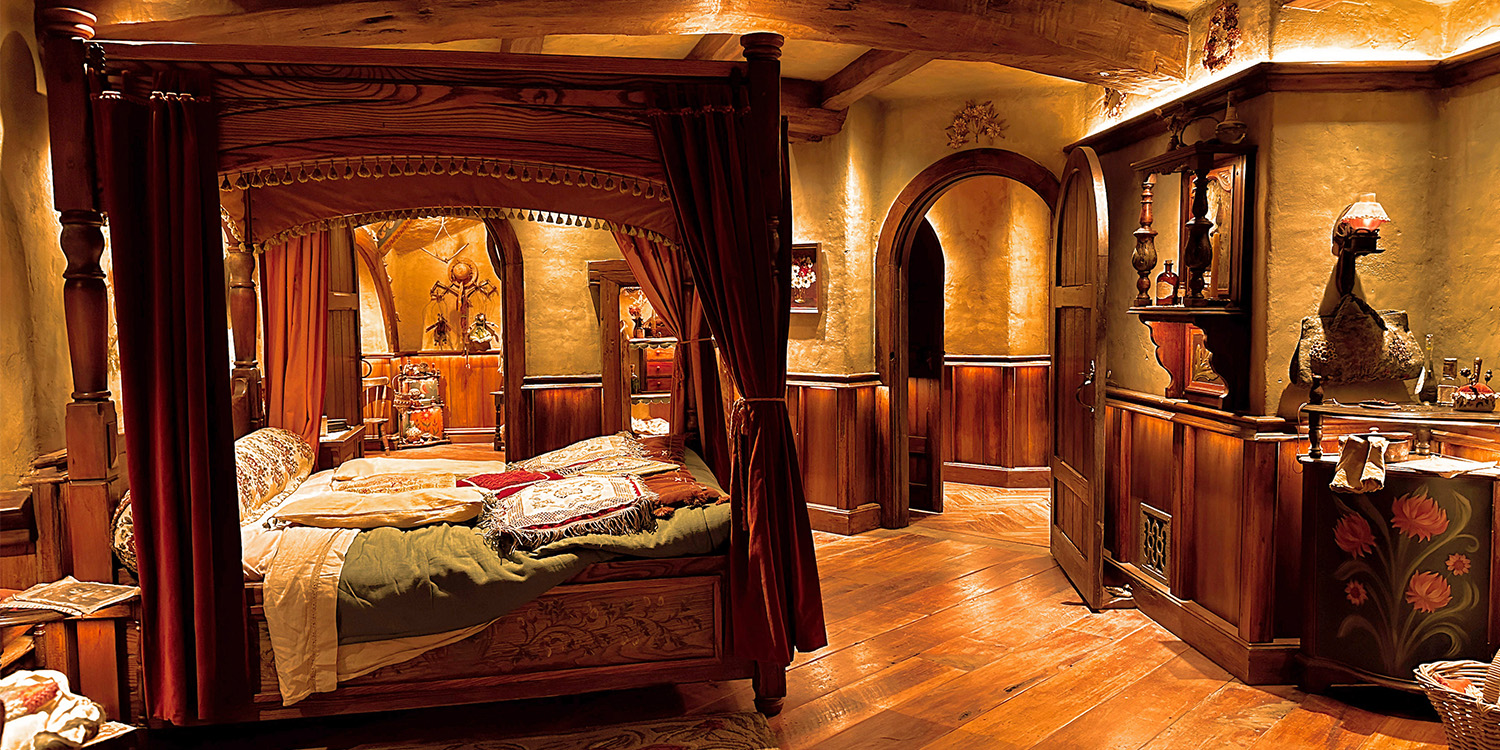
Today, when visitors enter the homes, they see the same snug, earth-sheltered, natural abodes with the curving architecture, soft oil lamps, and hand-crafted furniture that Director Peter Jackson envisioned for the films. Guests wander first through bedrooms, a parlor, and a bathroom, and then continue their tour in the second half of the home, taking in a kitchen, dining room, study, and pantries stocked to reflect the trades of the two families, the Twofoots and the Proudfoots, one in wicker baskets and the other in wine and cheese.
While oil lamps flicker warmly, most of the lighting in the underground, concrete bunkers remains unobtrusive, allowing visitors to forget that they are in an attraction. It is the subtlety of the illumination and the apparent absence of light sources and technology that make the design stand out.
Into the Hobbit Hole
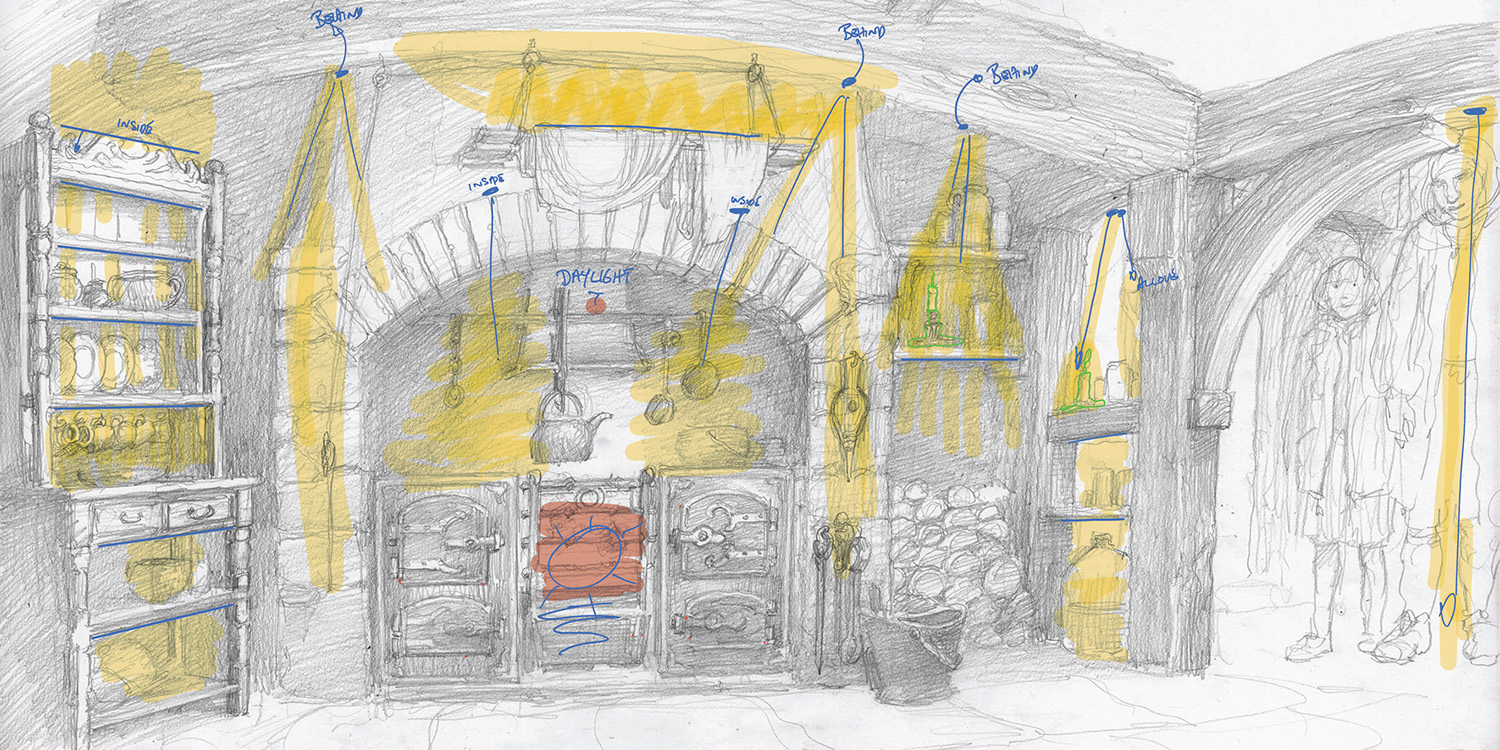
“Every light had to be built-in, disguised as lanterns, or made invisible,” noted Simpson. The team began by adding 24-V, 2700K COB LED light strips to a decorative rail that sat at shoulder-height, the lower lights washing downward and the uppers gently illuminating the domed roof. LED light strips were also integrated into each piece of furniture, from shelves to drawers and tables. For high shelves, recessed lights were placed at their bases, thus shining upward, while busier shelves possess luminaires at the front edge that shine both up and down. Each piece of joinery was given legs so that there would be room for under-lighting beneath tables and cabinetry.
As the project moved along, Simpson and the team worked collaboratively with the furniture and props designers, marking up all drawings and designs, indicating where lights would go and spending many hours in the various workshops resolving how the cables could be routed, exiting into the wall before connecting into the roof.
“The illuminated Hobbit holes on Bagshot Row demonstrate how design, craft and technology can converge to create immersive environments.”
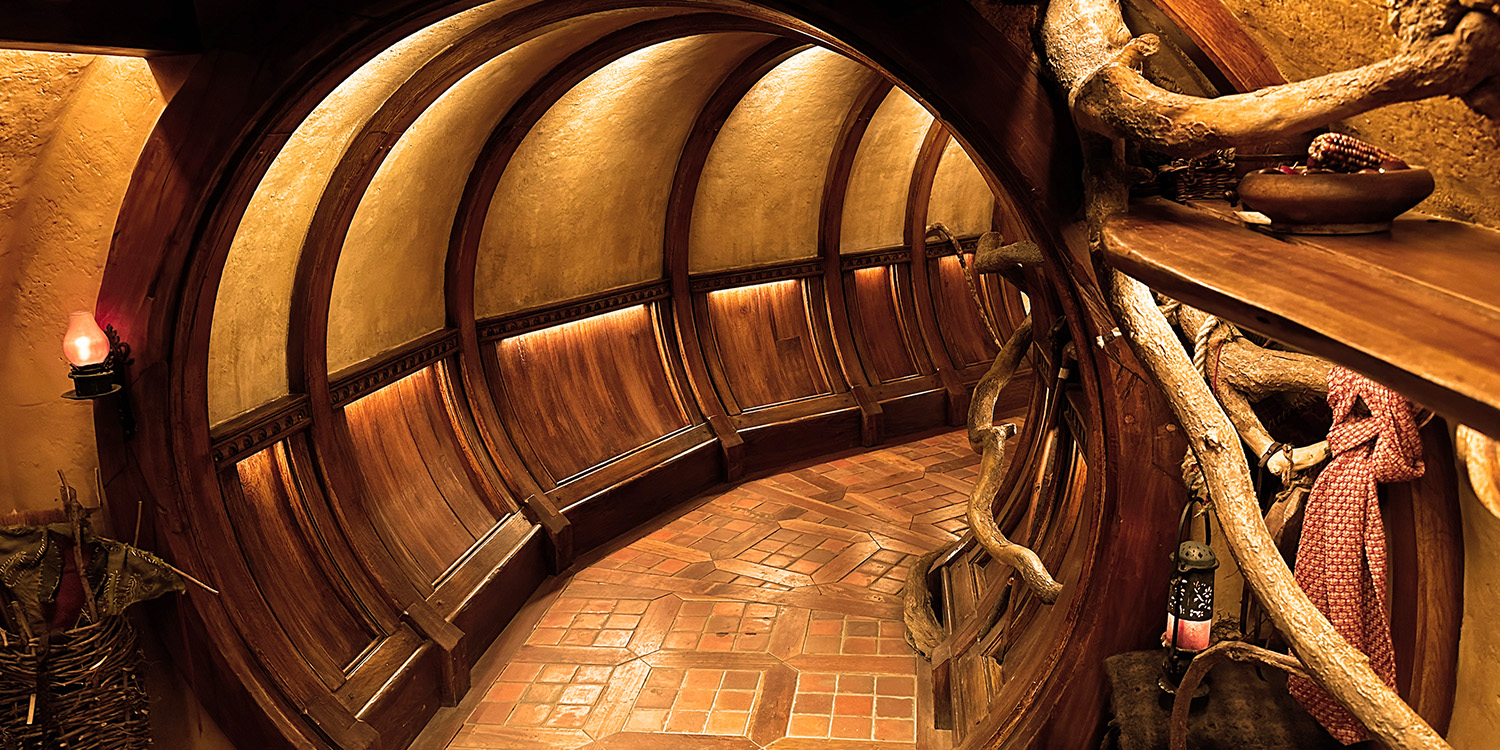
This illumination created a warm and cozy aesthetic, but it didn’t provide enough light. “It was beautiful but there was no direction. It wasn’t punchy enough,” admitted Simpson. This concern tied into early discussions about creating “Instagram moments”—photo spots where groups of visitors could gather, perhaps pose at the head of a table, and quickly capture memorable images. To meet this need, Simpson introduced subtle ceiling illumination within the molded, fire-safe, plaster-like ceiling beams, hiding Lightstudio’s K1X30 periscope downlights in knots and splits within the timber. Alongside these were deeply recessed, adjustable, Bevel Flute mini 3-W downlights from LightKit. These were fitted between the beams in the crafted plaster ceilings, carefully themed and hidden so that when guests entered a room or took a photo, the light sources were never visible.
Lanterns, sconces, and chandeliers constituted an additional layer of illumination. These fixtures needed to appear like Tolkien’s oil lamps, but commercially available flame bulbs, often designed for the distant stage, were not convincing at close range. Instead, Toulouse iterated multiple prototypes, building miniature flame-effect LED screens to replace the lamps until the glow was natural to those in the immediate vicinity. The Toulouse workshop team—Nora Thunders, Matthias Goeb, Oscar Pierson, and Jed Drake-Brockman—also developed a bespoke light source by fitting more than 120 sources into the hand-built lanterns, wall sconces, and chandeliers created by the Hobbiton Art Department themed to pass as Hobbit craftwork.
The glasswork was created by a scientific glassblower who, starting with Pyrex tubing designed for lab equipment, blew, twisted, and frosted the glass to create authentic lantern shades. These were painted and aged by the art department. Meanwhile, the Toulouse team engineered custom LED flame boards by adapting and modifying designs found online. These boards play looping flame animations and, when installed back-to-back in fixtures, give the appearance of a natural flicker. Each chandelier head can play a slightly different animation, producing an effect that makes the flames look convincingly real. The LED flames provide control over brightness, color, and flicker speed, allowing, for example, a bright daytime scene to transition into a dimmed evening setting.
The immersive effect extends beyond the interior lighting. Weather-responsive window projections powered by Epson UST EB-805F ultra-short-throw projectors allow visitors to look “outside” and see the same clouds or sunshine they just experienced outdoors.
“Environmental audio is layered subtly through Crown CDI4300 amplification and JBL Control 23 speakers.”
There and Back Again
Behind the scenes, the scale of the installation was considerable, including over 750 channels of dimming across roughly 800 fixtures, most addressed individually. “Every light or every piece of furniture is a different channel, so they could all be balanced,” said Simpson. Achieving that balance resulted in long hours of fine-tuning, adjusting levels so that one light didn’t change the effect of another.
To preserve the warmth of Tolkien’s world, vaporproof jelly jars are set at 2700K for a lantern-like glow. Only the LEDs by the windows are slightly warmer, set to 3000K to avoid a “muddy” effect. Power is supplied through a backbone of Meanwell supplies and eldoLED DMX drivers (LIN180D linear drive DC 180 watts and PW50SA powerdrive), with hundreds of drivers tucked discretely onto the roof. Each is a reliable, multichannel unit designed to run flawlessly through Hobbiton’s 12-hour days, seven days a week.
At the heart of the system is a Pharos Designer control system, programmed with custom Toulouse scripts and synchronized through BrightSign media players so that light, sound, and projection work seamlessly together.
Environmental audio is layered subtly through Crown CDI4300 amplification and JBL Control 23 and Sonance speakers.
In November 2023, eight and a half months after the start of the project, the doors of the two Hobbit holes swung open to their first tourists. The illuminated Hobbit holes on Bagshot Row demonstrate how design, craft and technology can converge to create immersive environments. In these comfy, underground homes, the lighting design disappears into the narrative, guiding visitors, highlighting details, and shaping the mood, lending credence to Bilbo Baggins’ expression: “Bother burgling and everything to do with it! I wish I was at home in my nice hole by the fire, with the kettle just beginning to sing!”